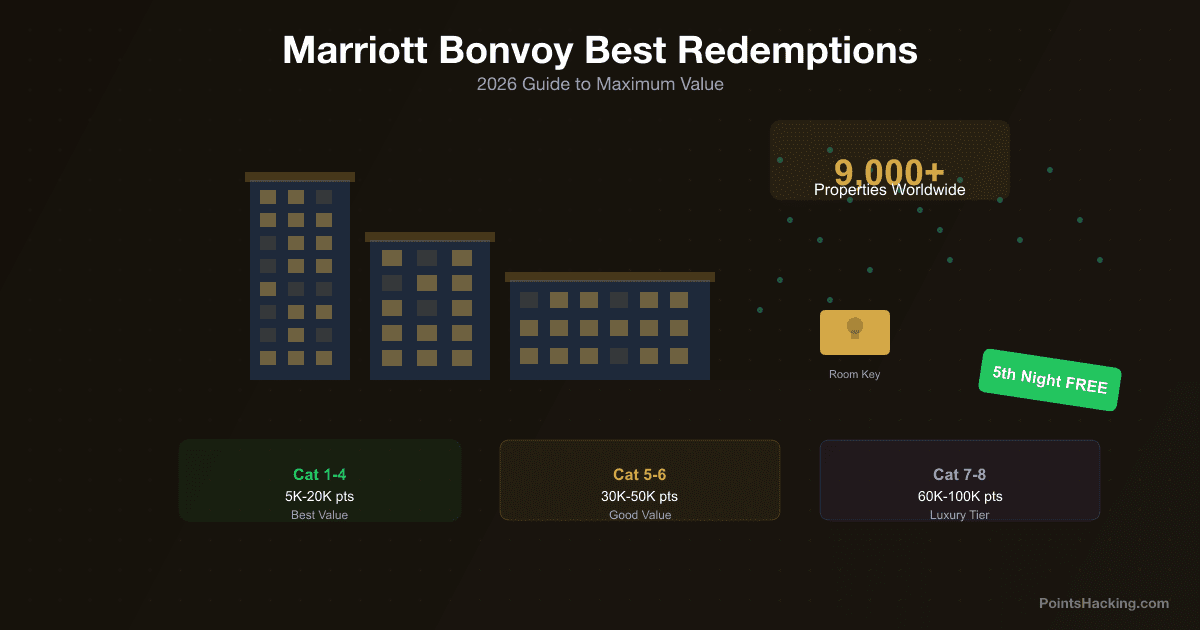
Marriott Bonvoy is the world's largest hotel loyalty program, encompassing more than 9,000 properties across 30 brands in over 140 countries. It is also one of the most complicated programs to extract value from, thanks to a fully dynamic pricing model that replaced fixed award categories in 2022. Gone are the days of predictable chart-based pricing; today, Marriott award rates fluctuate daily based on demand, cash prices, and availability algorithms.
That said, good Bonvoy redemptions absolutely exist. The key is understanding when you are getting fair value (above 0.8 cents per point) versus overpaying, and knowing which properties, regions, and booking tactics consistently deliver outsized returns. This guide covers everything you need to maximize your Bonvoy points in 2026.
If you are comparing hotel programs, see our Hyatt best redemptions guide first — Hyatt's program generally offers better point value, but Marriott's sheer property count means you will need Bonvoy for destinations where Hyatt simply does not have a presence.
Dynamic Pricing Explained
Under Marriott's dynamic pricing model, award rates are not fixed. A room at a given property might cost 30,000 points on a Tuesday in February and 80,000 points on a Saturday in July during peak season. The pricing algorithm takes into account cash room rates, occupancy levels, demand forecasts, and property tier.
The practical implication: you cannot assume a "good" property will always be a "good" value in points. You must evaluate each specific dates at each specific property by calculating the cents-per-point (CPP) value of the redemption.
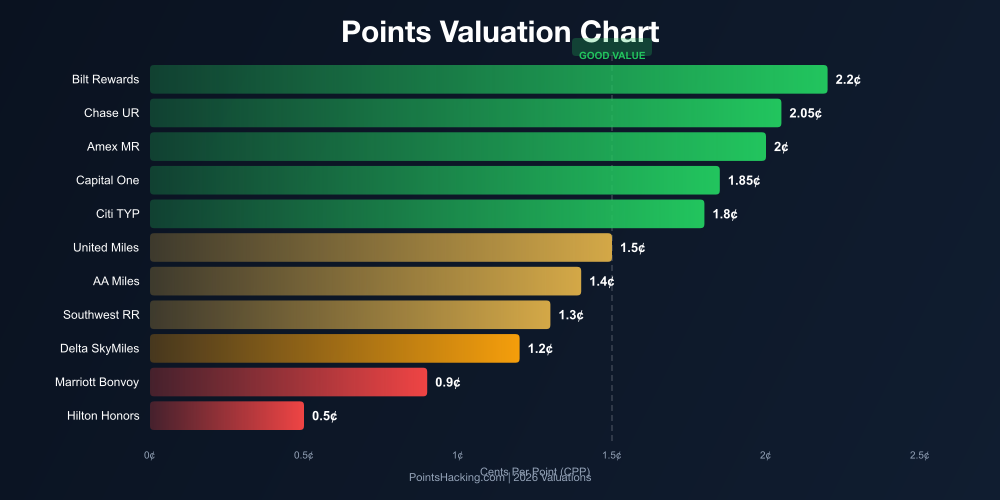
The formula is simple: divide the cash price of the room by the number of points required, then multiply by 100. If a room costs $200 and requires 25,000 points, that is (200 / 25,000) x 100 = 0.8 cents per point. That is the break-even threshold for Marriott — the average redemption value most analysts assign to Bonvoy points. Anything above 0.8 CPP is a good redemption; above 1.0 CPP is excellent; above 1.2 CPP is exceptional.
Dynamic pricing actually creates opportunities. When demand is low — off-peak dates, shoulder season, last-minute availability — award rates sometimes drop significantly while cash rates remain relatively stable, improving CPP. You can occasionally find redemptions at 1.0 to 1.5 CPP at properties that normally yield poor value during peak periods.
Always check the math before booking. Do not assume that a luxury brand automatically means good points value — a St. Regis at $600 per night requiring 110,000 points is only 0.55 CPP, which is terrible. But that same property at $400 on a slow night with 50,000 points required is 0.8 CPP — break-even. Context matters.
The Fifth Night Free Benefit
One of the most reliably valuable features of Marriott Bonvoy is the fifth night free on award stays. When you book five or more consecutive award nights at the same property, the fifth night costs zero additional points — the cost of that night is averaged across the other four nights instead.
This benefit effectively reduces the per-night cost of any five-night award stay by 20 percent. If a property costs 40,000 points per night, a five-night stay would normally cost 200,000 points. With the fifth night free, it costs 160,000 points — a savings of 40,000 points, or $320 at 0.8 CPP valuation.
The fifth night free stacks with other offers and benefits. If you hold Marriott elite status, your points bonus still applies. If you are using a free night certificate for one of the five nights, the math adjusts accordingly. The fifth night free is also available when booking suites and upgraded room types if you have status and complimentary upgrades are available at check-in.
Strategy: Always try to structure five-night stays rather than four-night stays when the itinerary allows. Even adding a fifth night you might not need can be worthwhile if the points cost is low and the alternative would be paying cash for a fifth night at a different property.
Free Night Certificates: Boundless vs. Brilliant
Marriott co-branded credit cards from Chase and American Express come with annual free night certificates that provide outsized value when used strategically.
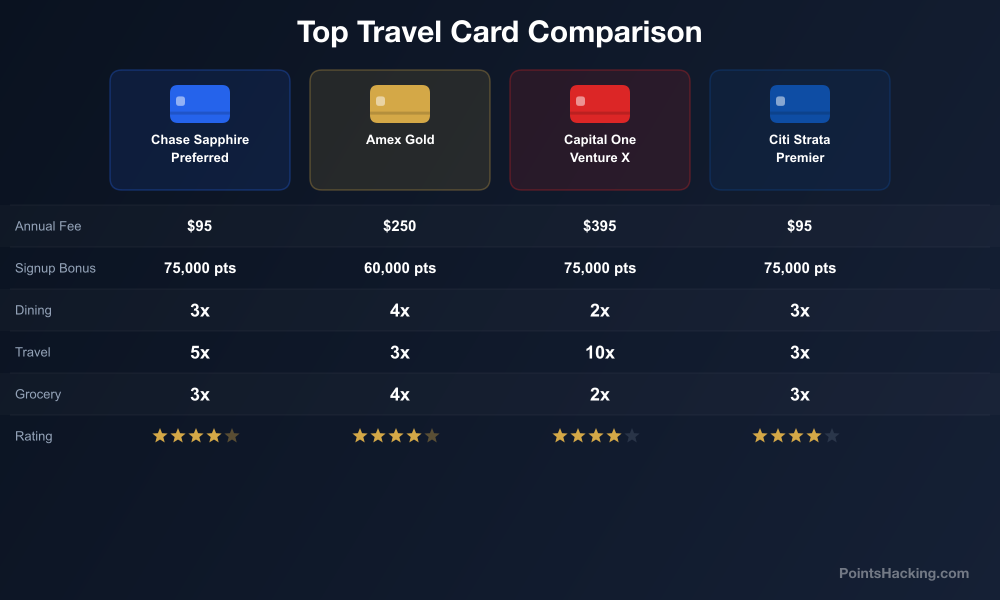
The Marriott Bonvoy Boundless card (Chase, $95 annual fee) includes one free night certificate worth up to 35,000 points annually after account anniversary. The certificate can be used at any Marriott property with an award rate at or below 35,000 points per night. During low-demand periods, this certificate can cover nights at mid-tier Marriott properties including Sheraton, Westin, and Autograph Collection hotels that regularly run between 25,000 and 35,000 points. Used at a property where the cash rate is $200 to $300 per night, this certificate alone offsets the entire annual fee and then some.
The Marriott Bonvoy Brilliant card (American Express, $650 annual fee) includes a more powerful free night certificate worth up to 85,000 points. Marriott also allows you to top off this certificate — you can use up to 15,000 of your own points to access properties priced up to 100,000 points per night. That effectively gives you access to the highest-tier Marriott properties including W Hotels, Edition Hotels, and Luxury Collection flagships. A single night at a luxury property that would otherwise cost $600 to $900 can easily justify the Brilliant's premium annual fee, especially when combined with the card's $300 Marriott dining credit and Platinum elite status benefit.
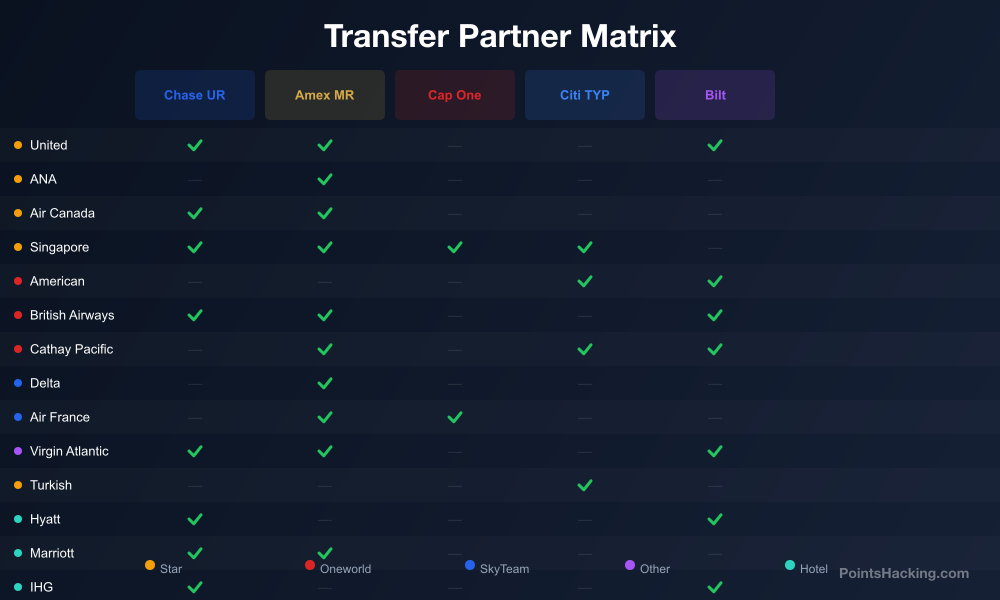
Key tip: Do not let free night certificates expire unused. The Boundless certificate expires one year after issuance; the Brilliant certificate expires at the same interval. Set a calendar reminder six months before expiration to ensure you plan a redemption in time. See our best travel credit cards 2026 guide for the full breakdown of which Marriott card makes sense for your travel goals.
Best Properties by Region in 2026
Despite dynamic pricing, certain properties and regions consistently deliver strong Bonvoy value. Here are the areas where your points stretch furthest:
Southeast Asia and the Maldives: Resort properties in Thailand, Indonesia, and the Maldives often have cash rates that are high relative to their point costs during off-peak periods. The W Maldives, JW Marriott Maldives, and Le Méridien properties in Bali and Phuket regularly yield 1.0 to 1.5 CPP on strategic dates.
The Maldives in particular is a strong Bonvoy market because cash rates are extremely high (often $800 to $2,000+ per night) while award availability can be reasonable during shoulder season (May-June, November).
Eastern Europe and the Middle East: Properties in cities like Prague, Dubai, Abu Dhabi, and Istanbul often have competitive award rates relative to cash prices. The St. Regis Dubai and W Dubai are occasional strong values when booked during lower-demand periods. Eastern European Autograph Collection and Sheraton properties in cities like Warsaw, Budapest, and Bucharest can yield 1.0+ CPP on leisure dates.
US Urban Markets (Off-Peak): During conferences and events, cash prices at urban Marriotts spike dramatically while award rates may not move as aggressively. But the inverse is true off-peak — a downtown Westin or Sheraton on a slow weekend can yield 1.0+ CPP when rooms are $200 to $300 cash and point rates are moderate.
Properties to Avoid on Points: New York City, San Francisco, and London Marriotts during peak periods are consistently poor value — cash rates are high but point rates are astronomical, often yielding 0.5 CPP or less. Theme park area hotels in Orlando also tend to be poor value. In these markets, paying cash and earning points on the stay is usually better than redeeming.
Elite Status and Its Real Value
Marriott Bonvoy elite status tiers — Silver (10 nights), Gold (25 nights), Platinum (50 nights), Titanium (75 nights), and Ambassador (100 nights + $20K spend) — provide meaningful benefits that enhance the value of your stays even if points redemptions are modest.
Gold status (included with the Boundless and Bold cards) provides 25% bonus points on paid stays, priority late checkout, and enhanced room upgrades when available. Platinum status (included with the Brilliant card) adds 50% bonus points, lounge access at select properties, suite night award certificates (for upgrading to suites on award and paid stays), and guaranteed 4pm late checkout. These benefits compound over frequent stays, adding value beyond what the base point earnings suggest.
For most travelers who do not stay 50+ nights per year organically, the Brilliant card's complimentary Platinum status is the most efficient path to Marriott's most useful benefits — particularly suite night awards, which can upgrade an award stay from a standard room to a suite worth hundreds of dollars more per night.
For context on how Marriott's program compares to alternatives, our points and miles valuations guide breaks down every major hotel currency side by side.
Why Hyatt Usually Offers Better Value — But Marriott Has 9,000+ Properties
The honest truth: World of Hyatt offers better points value than Marriott Bonvoy for most travelers. Hyatt points are worth approximately 1.7 cents each on average versus Marriott's 0.8 cents. Hyatt still uses a partially category-based system that makes finding value more predictable. And Hyatt's transfer partnership with Chase Ultimate Rewards makes it easy to top up your balance.
But Hyatt has approximately 1,100 properties worldwide. Marriott has more than 9,000. For any destination outside major cities and resort areas, Marriott will often have the only quality points-redeemable property available. If you are traveling to a second-tier US city, a smaller international destination, or anywhere off the beaten path, Bonvoy's enormous footprint means you will need the program regardless of the point value equation.
The practical strategy: Prioritize Hyatt for destinations where Hyatt has a strong presence. Use Marriott for everywhere else, and apply the CPP filter diligently to avoid terrible redemptions. You can visit Marriott.com to search award availability and calculate point costs before committing.
Frequently Asked Questions
What is a good redemption value for Marriott Bonvoy points in 2026?
A good redemption delivers at least 0.8 cents per point (CPP) — the break-even value. Excellent redemptions yield 1.0+ CPP. Calculate CPP by dividing the cash room rate by the point requirement and multiplying by 100. Anything below 0.6 CPP should generally be avoided.
How does Marriott dynamic pricing work?
Award rates fluctuate daily based on demand, occupancy, and cash pricing algorithms. There are no fixed category charts anymore. The same property can cost 30,000 points one night and 80,000 the next. Always check the specific dates you need and calculate CPP before booking.
What is the Marriott Bonvoy fifth night free benefit?
When you book five or more consecutive award nights at the same property, the fifth night is free — its cost is averaged across the other four nights. This effectively reduces your per-night point cost by 20% on five-night stays.
How much is the Marriott Bonvoy Brilliant free night certificate worth?
The Brilliant certificate covers up to 85,000 points, and you can top it off with up to 15,000 of your own points to access properties priced up to 100,000 points. Used at a luxury property with a $600+ cash rate, the certificate alone can justify the card's $650 annual fee.
Is Marriott Bonvoy or World of Hyatt a better hotel loyalty program?
World of Hyatt generally offers better points value (1.7 CPP vs. 0.8 CPP) and more predictable award pricing. Marriott Bonvoy's advantage is its massive portfolio of 9,000+ properties — essential for destinations where Hyatt has limited or no presence.