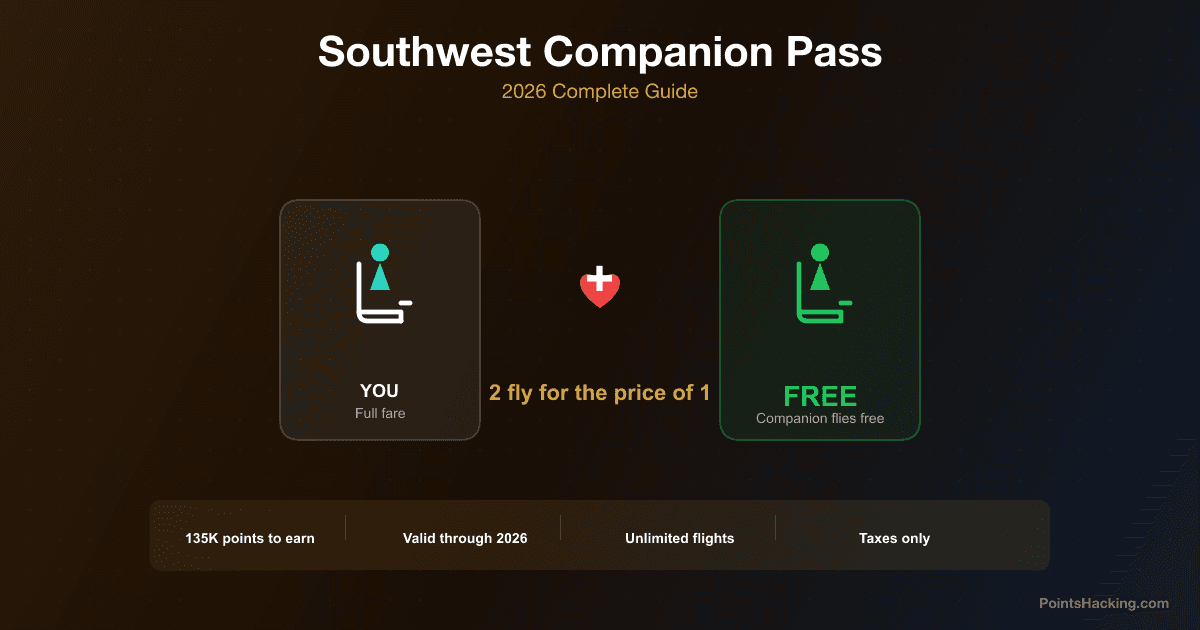
The Southwest Companion Pass is widely regarded as the single best deal in domestic air travel. Once you earn it, your designated companion flies with you for free — paying only taxes and fees, which are typically $5.60 each way — on every flight you book, whether paid or award. That effectively cuts the cost of every Southwest trip in half for up to two calendar years. In 2026, with Southwest's newly launched assigned seating and expanded Hawaii network, the Companion Pass is more valuable than ever.
This guide walks you through exactly how the pass works, the fastest path to earning it, the optimal timing strategy, and how to stack it with Southwest's famously flexible fares to extract maximum value.
For context on how Southwest points fit into the broader travel rewards ecosystem, see our Chase Ultimate Rewards complete guide, since Chase is the primary gateway to Southwest points.
What Is the Southwest Companion Pass?
The Southwest Companion Pass allows one designated companion to fly with you on any Southwest flight, any time, for just the cost of taxes and fees. It applies to both cash bookings and award redemptions, meaning if you use points for your ticket, your companion also flies for nearly nothing.
The pass is earned by accumulating 135,000 qualifying Rapid Rewards points within a single calendar year (January 1 through December 31). Once earned, the pass is valid for the remainder of that calendar year plus the entire following calendar year — a potential window of nearly two full years if earned early in January.
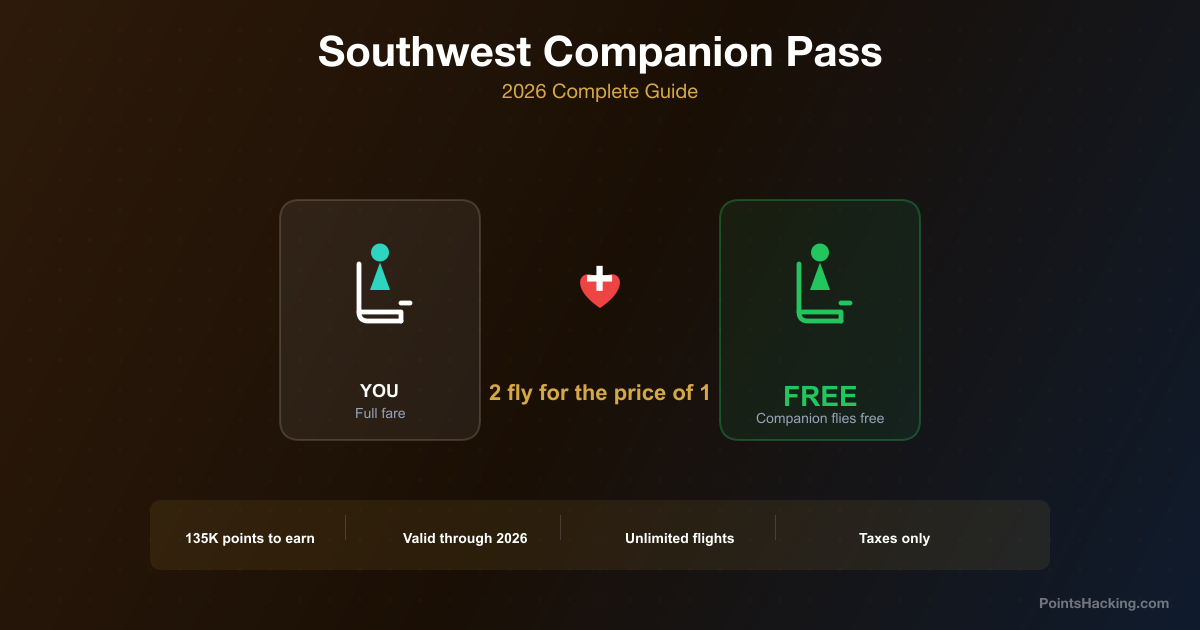
You can change your designated companion up to three times per calendar year, making the pass useful even if your travel situation changes. The companion must be booked at the same time as your ticket and on the same itinerary. You can use it for leisure travel, business travel, family trips, and even solo flights where you decide to bring someone last minute.
Not all points count toward Companion Pass qualification. Qualifying points include points earned from flying Southwest, points earned from Southwest co-branded credit card spending, points earned from Rapid Rewards partners (hotels, car rentals, dining), and points transferred from Chase Ultimate Rewards. Points purchased outright do not count, and neither do points transferred from other programs or gifted by other members.
How to Earn 135K Qualifying Points
The fastest path to 135,000 qualifying points in 2026 is combining credit card welcome bonuses with everyday spending. Southwest offers four co-branded consumer credit cards through Chase, plus two business cards, and the welcome bonuses alone can get you most of the way there.
Here is the math that most Companion Pass chasers use. The Southwest Rapid Rewards Plus card and the Southwest Rapid Rewards Premier card each typically offer welcome bonuses in the 50,000-to-75,000 point range after meeting minimum spend requirements. The Southwest Rapid Rewards Priority card often carries a similar or larger bonus. If you apply for two consumer cards in the same year, the combined bonuses can put you at 100,000 to 150,000 qualifying points — enough to earn or nearly earn the pass without a single flight.
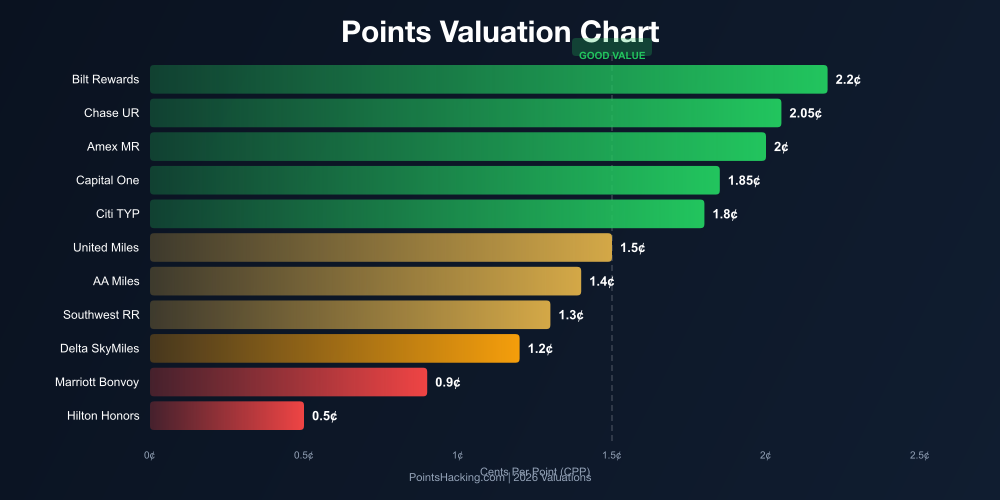
Important Chase 5/24 rule note: Chase will not approve most of their cards if you have opened five or more credit cards from any issuer in the past 24 months. Plan your application strategy carefully. Our credit card application order strategy guide covers this in depth and will help you sequence your applications to avoid denials.
Southwest business cards (the Rapid Rewards Performance Business and Rapid Rewards Premier Business) also earn qualifying points, and their welcome bonuses count. Business cards do not report to personal credit bureaus in most cases, so they do not count against your 5/24 total at Chase — but you still need to be under 5/24 to get approved. Pairing one consumer card and one business card is a popular strategy to stack bonuses while managing 5/24 exposure.
Beyond welcome bonuses, everyday spending earns 1-3 qualifying points per dollar depending on the category and which card you hold. The Priority card earns 3x on Southwest purchases, 2x on hotels and car rentals booked through Rapid Rewards, and 1x on everything else. Routing your Southwest purchases through the right card accelerates your progress toward the 135K threshold.
The October–December Application Timing Strategy
The single most important strategic decision for Companion Pass chasers is timing. Because the pass is valid through the remainder of the earning year plus all of the following year, you want to earn it as early in the calendar year as possible — ideally in January.
The way to engineer a January earning is to apply for your Southwest credit cards in October, November, or December of the prior year. Here is why: welcome bonus points from credit cards post when your first statement closes, which is typically 30 to 60 days after account opening. If you apply in October, your bonus points will likely post in November or December. But the qualifying points from your welcome bonus count in the year they post — and here is the critical insight: if those points post in the new year, you earn the Companion Pass valid for that entire year plus the next.
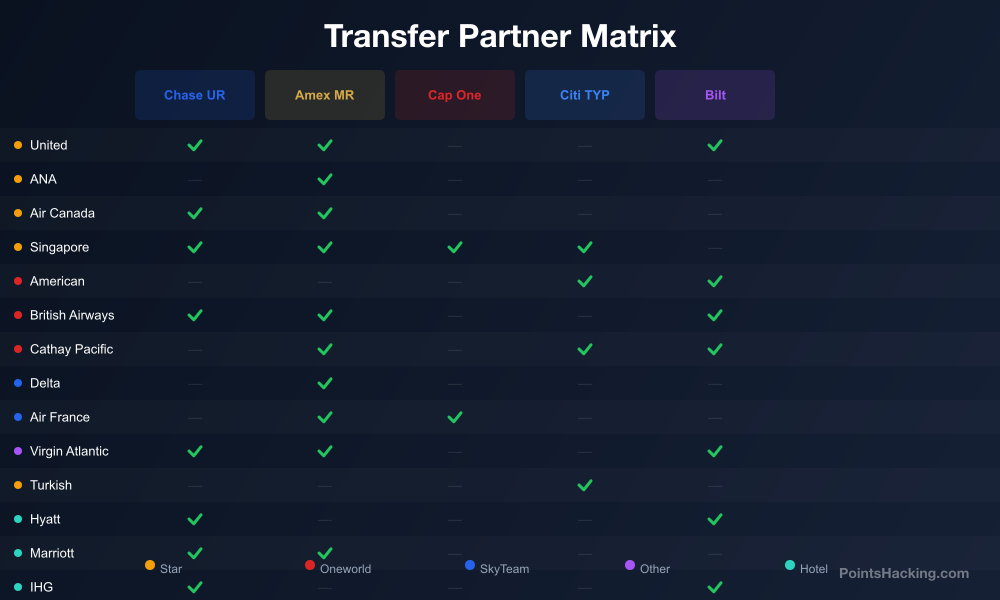
The optimal playbook: Apply for two Southwest cards (one consumer, one business) in October or November. Meet the minimum spend requirements over the first two months. The welcome bonuses post in December or January. Supplement with any additional spending as needed to hit 135K. Earn the pass in January, enjoy it for nearly two full years.
If you apply in October and your bonuses post in December of that year, you get a shorter window (just the following year). The safe bet is applying in late November or December to ensure bonuses post in January. This is the strategy that earns you the maximum possible time with the pass.
For more on sequencing credit card applications for maximum rewards, see our guide on best travel credit cards 2026, which covers the full landscape of cards and how to build toward goals like the Companion Pass.
Southwest's Assigned Seating Change in 2026
One of the biggest changes in Southwest's history took effect in January 2026: the airline transitioned from its famous open-seating model to assigned seats. For decades, Southwest's boarding experience — where passengers choose their own seats based on boarding position — was a core part of the brand. That era is over.
Under the new model, Southwest now assigns seats at booking, similar to every other major carrier. This changes a few things for Companion Pass holders. Previously, the companion boarding experience was seamless because you could always sit together regardless of when you checked in. With assigned seating, companions are now assigned seats at the same time as the primary traveler, eliminating the risk of being split across the cabin.
The transition also introduced new premium cabin options on select routes, offering extra-legroom seats for an upcharge. The Companion Pass benefit extends to whatever fare the primary traveler books — if you book a standard seat, your companion gets a standard seat; if you pay for extra legroom, Southwest's policy extends that benefit to your companion as well on most routes.
From a points-earning standpoint, nothing has changed. Flights still earn Rapid Rewards points at the same rates, and the Companion Pass still applies to both paid and award bookings.
Southwest Hawaii Routes in 2026
Southwest began Hawaii service in 2019 and has steadily expanded its island network. In 2026, Southwest serves Hawaii from multiple West Coast departure cities including Los Angeles (LAX), San Jose (SJC), Sacramento (SMF), Oakland (OAK), San Diego (SAN), and Seattle (SEA), flying into Honolulu (HNL), Maui (OGG), Kona (KOA), and Lihue (LIH).
The Companion Pass works on Hawaii routes exactly as it does on mainland routes. Your companion pays only taxes and fees regardless of whether you book a Wanna Get Away fare, a Wanna Get Away Plus fare, or an Anytime fare. On award redemptions, your companion pays only the $5.60 one-way taxes.
Hawaii redemptions are where the Companion Pass gets truly spectacular.
Southwest's Wanna Get Away fares to Hawaii regularly price at 10,000 to 18,000 points each way. With the Companion Pass, two people can fly round-trip to Hawaii for 20,000 to 36,000 points total — the equivalent of spending just $200 to $360 in points at standard Southwest valuations. Compare that to paid fares of $300 to $600 per person, and you are looking at massive savings.
Check Southwest.com for current Hawaii availability and award pricing, as inventory fluctuates significantly. The best Hawaii award availability tends to open up around 8 months in advance, with additional seats releasing closer to departure.
Stacking the Companion Pass with Low Fares
Southwest's unique fare flexibility makes the Companion Pass even more powerful than it sounds. Southwest allows free same-day changes and cancellations on all fare types — you simply rebook to a lower fare if prices drop and receive the difference as travel funds. There are no change fees.
Here is the stacking strategy: Book a trip as soon as you spot reasonable availability. Set a fare alert. If prices drop, cancel and rebook at the lower price. The Companion Pass follows automatically — your companion's booking updates whenever you rebook. You are essentially getting two tickets for the price of one on Southwest's already-low fares, then getting to reprice whenever fares drop.
Wanna Get Away fares are the sweet spot. They cannot be transferred to another person but they can be converted to Southwest travel funds, which can then be applied to future bookings. Anytime and Business Select fares get full refundability back to your credit card. For Companion Pass strategy purposes, Wanna Get Away fares are usually the right choice since your companion is getting an enormous discount regardless.
For maximum value, combine the Companion Pass with Southwest's Rapid Rewards points and the 25% points bonus you receive on flights booked with the Priority card. The Priority card also includes 7,500 bonus points annually, a $75 Southwest annual travel credit, and four upgraded boardings per year — a strong supporting card for frequent Southwest flyers. Our Chase Ultimate Rewards guide explains how to transfer Chase points to Southwest at a 1:1 ratio to top up your balance before a trip.
Frequently Asked Questions
How many qualifying points do you need for the Southwest Companion Pass in 2026?
135,000 qualifying Rapid Rewards points within a single calendar year (January 1 through December 31). Welcome bonuses from Southwest co-branded Chase credit cards are the fastest way to accumulate these points.
Do Chase Ultimate Rewards points transferred to Southwest count toward the Companion Pass?
Yes. Points transferred from Chase Ultimate Rewards to Southwest Rapid Rewards at a 1:1 ratio count as qualifying points for the Companion Pass. This is one of the most efficient ways to top off your balance if you are close to the 135K threshold.
How long is the Southwest Companion Pass valid?
The pass is valid for the remainder of the calendar year in which you earn it, plus the entire following calendar year. Earned in January? You get nearly two full years. Earned in December? You get only the following year.
Can I change my companion on the Southwest Companion Pass?
Yes, you can change your designated companion up to three times per calendar year. Changes take effect immediately and are processed through your Rapid Rewards account online.
Does the Companion Pass work on Hawaii flights?
Yes. The Companion Pass works on all Southwest routes including Hawaii, both for paid fares and award redemptions. Your companion pays only the applicable taxes and fees, making Hawaii trips an exceptional value when combined with Wanna Get Away award pricing.